Building AI that helps people reach agreement
Okuhara Laboratory studies automated negotiation, multi-agent systems, and LLM-based decision support. We design AI that works alongside people and helps groups decide, rather than deciding for them.
Shun Okuhara, Ph.D.
Lecturer, Graduate School of Engineering, Mie University · Visiting Researcher, Institute for Advanced Research, Nagoya University
About the lab
The lab is led by Shun Okuhara, Lecturer at the Graduate School of Engineering, Mie University, and Visiting Researcher at the Institute for Advanced Research, Nagoya University. He received his Ph.D. in Engineering from Nagoya Institute of Technology in 2020 and was a Visiting Professor at Carleton University in Canada.
Frequent collaborators include Takayuki Ito (Kyoto University), Rafik Hadfi, and Mark Klein (MIT). The lab also maintains research connections with Canada. Shun Okuhara has given an invited talk at a joint seminar involving McGill University and Mila in Montreal. In addition, the lab is developing research exchange with the National Research Council of Canada, including student research visits and Okuhara's stay as a visiting researcher.
We value a healthy pace of work and respect each student's own career path. Students still building their AI or programming background are welcome, as long as they are ready to learn and to carry the implementation through themselves. You need to be curious and willing to do the work.
Research themes
Our core is decision support and consensus building. Education, healthcare and elderly support, and research support are the fields where we apply it.
Automated negotiation
Negotiation agents that represent people's interests and search for agreements when issues are many and interdependent.
Multi-agent consensus
Protocols and systems that help groups reach a decision without letting the loudest voice dominate the room.
LLM-based decision support
Dialogue agents built on large language models that draw out, organize, and explain what people actually prefer.
Explainable, human-centered AI
Methods that keep an AI's reasoning understandable, so the person stays in control of the final decision.
Applications span education, healthcare and elderly support, and AI for Science. If your interest sits next to these, we are glad to talk.
Talks and invited lectures
Shun Okuhara accepts invitations for talks, seminars, and lectures, including corporate training, university faculty development, seminars for local governments and regional groups, academic meetings, and outreach classes.
How AI agents will change society
Trends in generative AI, LLMs, and autonomous AI agents, and what they mean for work, research, and education.
For companies, universities, and general audiences
Consensus building and decision support with AI
How negotiation AI, multi-agent systems, and discussion support can help people make decisions.
For local governments, companies, and study groups
AI for Science and research automation
How AI is reshaping research planning, literature review, experiment support, and academic writing.
For universities and research institutions
Education and AI literacy in the age of generative AI
Using generative AI in higher education and data-science education, with its opportunities and challenges.
For high schools, universities, and educators
Selected past talks
- 2026.3 Tohoku University Open Science Seminar. "LLM strategies for the AI for Science era: practical know-how for redesigning the research process." Hosted by the Research Management Center, Tohoku University. Flyer
- 2025.8 "Agreement Generation from Negotiation Dialogues Using Utility Values and LLMs." Invited lecture at "Exploring Frontiers in AI," McGill University and Mila, Montreal. Poster
- 2022.11 "The next step beyond IoT: multi-agent systems and real-world applications." Industry-academia-regional seminar hosted by Sanjusan Bank, Sanjusan Research Institute, Mie University, and the Yokkaichi Chamber of Commerce. Flyer
- 2022.4 Mie University DS Public Seminar (2nd). "Real-world deployment of multi-agent systems as DX spreads: the state and challenges of distributed AI." Co-hosted by the Information Education Committee and the Information Education Research Organization (university-wide FD). Flyer
Activities
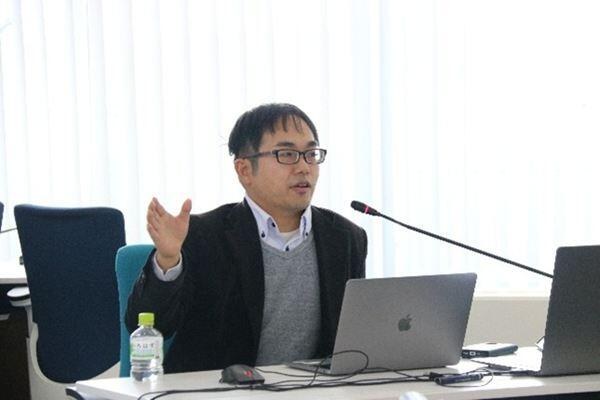
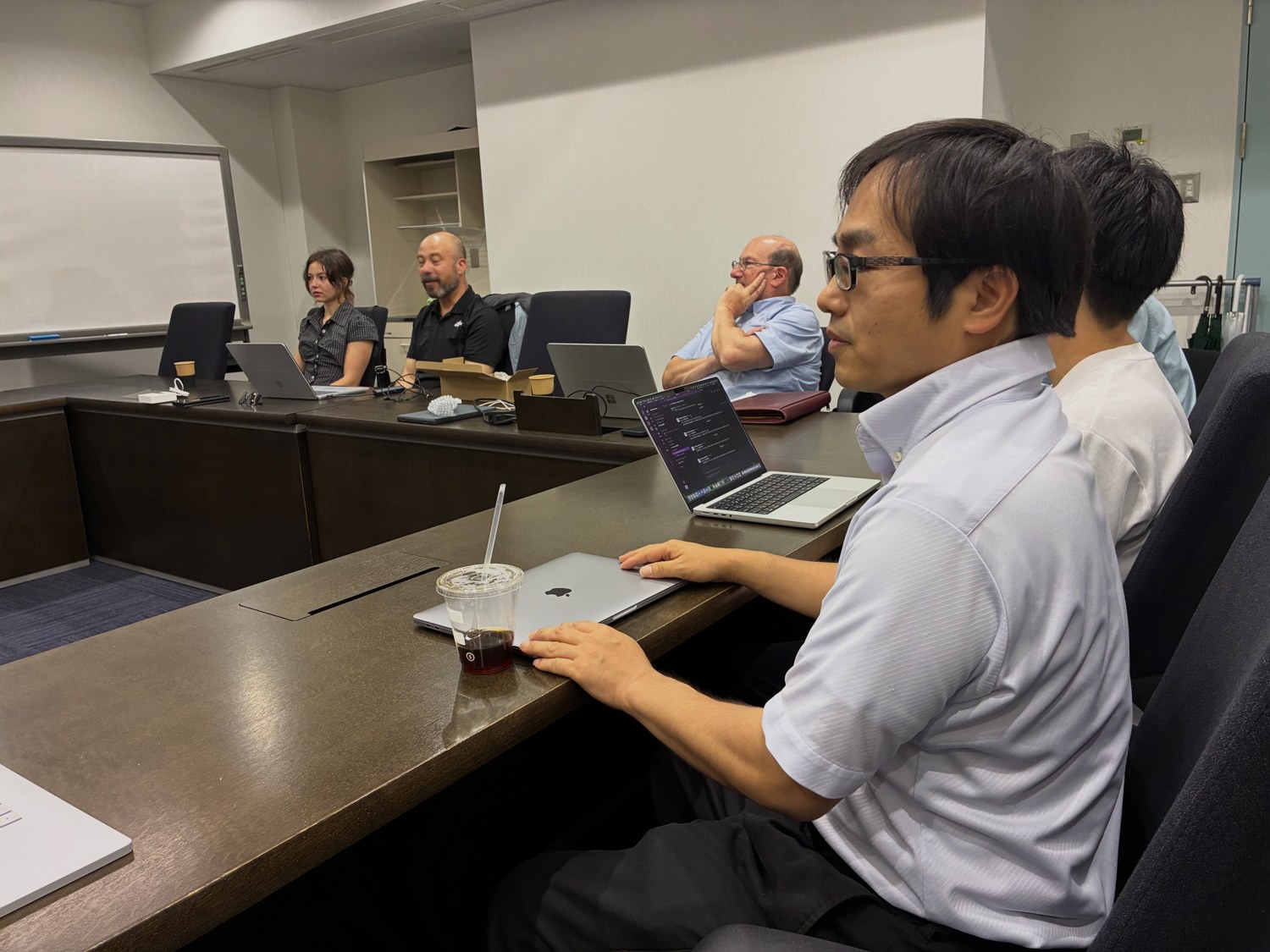
Scenes from talks, research presentations, and international collaboration.
Students we welcome
We are glad to hear from students who want to build, test, and publish, whatever field they come from.
- Interested in AI, data science, multi-agent systems, LLMs, and human-AI collaboration
- Able to learn new methods and papers on their own and drive their own research
- Motivated to program (e.g., Python) and build systems
- Keen to present at international conferences and write papers in English
- Interested in combining AI with other fields such as education, healthcare, elderly support, and regional issues
- Comfortable working through ideas in discussion with a team
We welcome students from diverse backgrounds, not only engineering but also information science, mathematics, education, psychology, cognitive science, and the social sciences. What matters most is the motivation to learn AI and information science, and the willingness to carry your work through to implementation and evaluation yourself.
International students are welcome
We supervise international master's and doctoral students and work with several partner universities across Asia. Applicants from outside engineering, including those with a humanities or social-science background, are welcome. Please note, however, that sufficient Japanese proficiency is required to study and carry out research in this laboratory (see below). Before contacting us, please read the points below carefully.
Language. Research supervision, lab seminars, and university procedures are conducted primarily in Japanese. Applicants are expected to have sufficient Japanese proficiency to take part in laboratory activities and to complete graduate studies successfully. English is used for reading and writing papers, so English ability is valuable, but it is not a substitute for the Japanese needed for daily supervision and coursework. Applicants who cannot yet study and conduct research in Japanese are unlikely to be accepted.
Check the requirements first. Applicants are responsible for confirming the admission, language, and academic requirements set by Mie University and by each scholarship program before applying. If these are not met, we may be unable to accept you or to prepare recommendation documents.
Acceptance is not guaranteed. We welcome inquiries, but an inquiry, even a detailed one, does not guarantee acceptance. We assess language ability, academic record, research plan, and our supervision capacity together.
MEXT scholarship
From the 2027 academic year onward, changes to MEXT's University Recommendation scheme have removed master's-level slots at many universities, and no such slot is currently available in the Graduate School of Engineering at Mie University. Master's applicants should consider the Embassy Recommendation route or other funding. University Recommendation for doctoral applicants is available but limited, and is assessed comprehensively (language, grades, research plan, fit). The entrance examination is held in August for both April and October enrollment, so please contact us by around June.
Government & external scholarships
Check the program's eligibility and language requirements before applying. If the required scores or eligibility are not met, we cannot prepare supervision documents.
Privately funded & research students
Privately funded applicants and pre-enrollment research students (kenkyusei) are considered individually, based on research fit, language ability, academic record, and our capacity. A prior consultation does not guarantee acceptance.
New international master's and doctoral students are assigned a Japanese-speaking university tutor for the first months after arrival (about three months), who helps with daily-life setup, Japanese, and getting started with studies in your field. Ongoing support for credits, classes, and research comes mainly from the supervisor and the lab.
Email the labContact
For admissions, research, or talk invitations, email the lab directly. To help us reply quickly, please include your background, your research interests, your intended start term, and your funding plan (MEXT, another scholarship, privately funded, or undecided).
- Principal investigator
- Shun Okuhara, Ph.D.
- Address
- Faculty of Engineering Bldg. 6, Mie University, 1577 Kurimamachiya-cho, Tsu, Mie 514-8507, Japan
More information
The pages below carry the full record. The lab and personal sites are written in Japanese; publications on researchmap can be viewed in English.